
November 7, 2025 | Caleb Roberts & Kaylee Begay
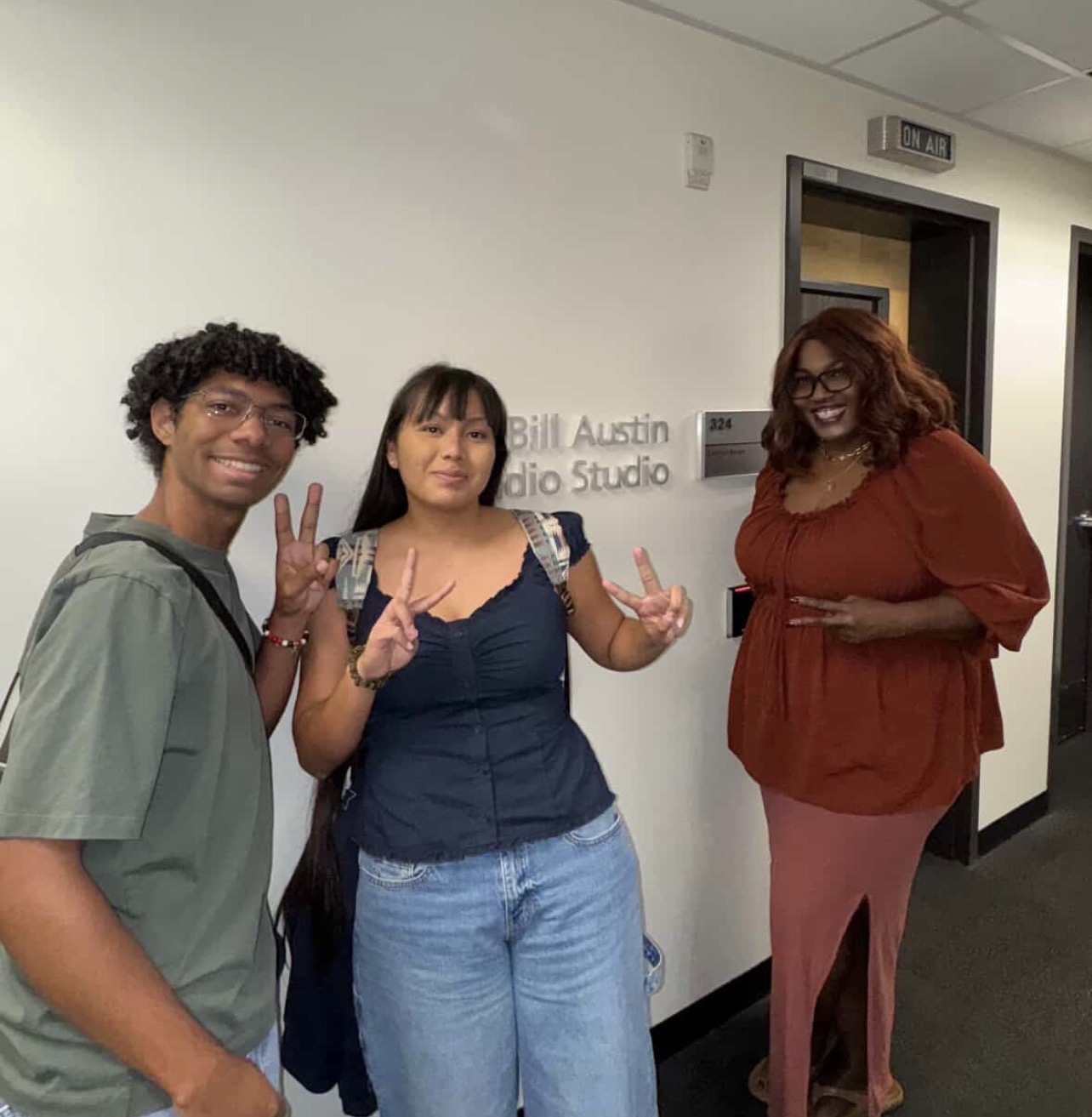
Teri Tobin is a singer-songwriter from Arizona whose music focus is around Soul and R&B. Teri Tobin has released multiple LP’s and EP’s such as Love Infinity, Christmas Child, So Good to Me, and Truth Is..., with her most recent album titled Forever. Also released today is “Home for the Holidays,” a collaboration with producer Myron. This weekend on Saturday, November 8, she is set to headline Tempe Jam with other artists, taking place from 6-10pm at the Tempe Sports Complex.
*This interview was conducted live on Blaze Radio during a Niche for Niche segment. Some parts of this transcript have been trimmed for clarity.
CR: Welcome to our show, Teri Tobin.
Teri Tobin: Why, thank you.
KB: To start off, you have an amazing voice. I remember when I was looking through your albums. It is just superb. It's very lovely and it really does calm down my nerves when I listen to it. You really do capture the beauty of soul, rhythm and the blues, and your most recent album released this past February called Forever, really speaks for itself about how great the genre is.
You said that this current album is about more than just romantic love, It's about the love we give ourselves, the love we learn from our ancestors, and the kind of love that stands the test of time.
How has your love for music as a singer and songwriter helped you spread this message of the importance of love within a person's life, whether it's loving one another, healing or love in all of its forms?
Teri Tobin: Wow. You make it sound so good, but no, you know, my relationship with music is love, right? So it makes it easy for me to be able to express it, regardless of what type of song that I'm singing and, referring back to the album, I didn't have a concept in mind. But being born on Valentine's Day, everything is about love for me. So that's why I say music and love. Everything's about love for me.
Even without being intentional about wanting to share the message of love, I do believe that there are times when music comes to me, and I know it's not me. I'm holding the pen, but I know that it's coming from a higher place. So with that alone, I put it out and sometimes it could just be a song called “Precious Little One,” which I'm debuting tomorrow also. It started off as a letter to myself. The things that I wanted to say to my younger self, things that maybe I wish someone had said to me, as a as a young person, but also being a parent, it's also words that I would love to say to my son, who's who's an adult now, but I won't embarrass him. I’ll just say that there are things that I wanted him to know also.
At any rate, the point that I'm trying to make is that I put the music out, whatever comes to me. And the blessing is because it is a universal language, the people that it resonates with. I don't know until I hear back, right? It’s another reason why I love the feedback that I get. Because there are times that I wrote a song that's really supposed to be a personal song, and then other people say, “Oh yeah, that really resonated with me.”
One of the songs on the album is called “N.O.L.L.Y,” which stands for No Other Love Like Yours. And that's where we talk about the ancestral piece where, you can hear in the beginning of the song, my late great-grandmother's voice is at the beginning of the song. And for me, it's a personal song. My uncle's playing sax. I really put it on there because I wanted to have a tribute to her.
Then, somebody recently told me that it reminded them of their grandmother. So for me, I just feel like as long as I'm being obedient to my craft, into being creative, and not allowing anxiety to overtake me, I feel like, you know, the message is in the music, and it will reach the people that it's supposed to reach.
KB: Yeah, and I think that I do agree with that as well because love in all of its forms is sentimental, it's physical. It's spiritual, and I love how your music resonates with every type of love in its form. I do love “Goodmorning, Love,” “Melanated Magic,” and "Love You Till Life.” I'd say those are my top 3 for now. Those really did resonate with me and I love how you speak about that as well.
You also said that you’d struggled with anxiety throughout your experience, but as you've gained so much experience within the music industry and over time and have enhanced the genre of R&B/Soul, I would like to turn back time and ask were there any artists or people you admire that inspired you to pursue a career within music? Were these artists also in the same genre as you?
Teri Tobin: Like I say, music has just been a part of me, my entire life, so I do have a vast taste in music. Growing up, they didn't have a lot of R&B radio stations here in Arizona as a child, so I listened to classic rock. I listened to the Crystal Gayle types, and these are way before your time, but I listened to a lot of different artists. In my home, my mom played a lot of gospel and a lot of R&B. And so my taste was also influenced by what she played in the house.
Now, what's interesting, of course, when you're a child and you're listening to your parents' music, you're like, “Oh, here we go again. I don't want to hear this again.” But it's so it is so ingrained in me. It is literally my core.
But I would say the artist, I probably won't be able to pick one, but Donnie Hathaway is my all time favorite singer, songwriter, performer of all time. I never got the chance to meet him before he passed, but there's just a thing about him. His voice, if you listen to his voice, it'll resonate so deeply within the soul. And when I heard him as a little girl, my thought was, “Ooh, I want to be able to impact people the same way.”
I'm listening to his songs. Some of his songs are about heartbreak. And of course, being that young, I didn't know what love was, I didn't know what heartbreak was, but I could hear it in his voice. I could hear what love sounded like. That's been kind of my MO, is to be able to do music where you hear and feel the love in it.
So he was probably, I would say he was one of the 1st ones. Of course, I love Stevie Wonder and Prince and Luther Vandross and Marvin Gaye and Sam Cook and the list goes on and on. And you notice, I say a lot of male artists, not to say that I didn't listen to female artists, but what I found, what I later realized in life is I chose a lot of those male artists because as I'm listening to them, I could do duets with them.
They didn't know I was doing duets with them, but I would harmonize with those male artists. And so, when you hear me talk about it, talk about mostly male artists, but I think in my lifetime, I would say the artist that I most was inspired by as a child was definitely Whitney Houston.
I mean, it's still raw for me, the fact that she's no longer here, but she's the kind of artist that as a little girl, when she was popular is when I was doing auditions, and every audition I went to, everybody was singing Whitney Houston. It would be like 10 of us in a room waiting to audition and we were all singing “The Greatest Love of All.” It's like, “Okay, so how many more times can you listen to this?”
But the fact of the matter is, there's something very real and raw about her vocals and about her delivery. I think, again, it always goes back to presentation. You know, I don't profess to be the best singer in the world, but I do want to make sure that you feel me when I'm performing.
So, I would say Donnie and Whitney are the top 2 that come to mind. But again, I love Aretha. I love, you know, I love Gladys Knight. Current singers now, I love Jasmine Sullivan, India.Arie, Jill Scott, the list goes on and on and on.
As a plot twist, one of my other favorite female vocalists is Barbra Streisand. Most people probably wouldn't think that because of the kind of music that I sing, but one of the things that struck me as a child of listening to her and seeing her story, she wasn't really as heavily, in my opinion, as respected as she should have been.
Mainly, mainly because of the things that they said about her, not fitting the bill of what beauty looked like or what they thought beauty should look like, I guess. I don't know. But when you listen to the richness of her voice and the things that she writes and the things that she sings about, she's definitely been one of my top favorite entertainers for sure.
KB: I also think that is really great as well. Especially when you grow up with soul, and especially, like you said, with your mother's tunes, you think it's so boring at such a young age. And then you start growing up and you're like, “Oh, wait, she did have a point.” That was also with me with classical music because my mom would play classical music all of the time, like piano, violin, orchestra, jazz. It was always nonlyrical songs. And at the time, I didn't understand. When I grew up, I began to see the beauty of it as my mind began to grow within the music industry and learn how beautiful it is to learn from these non-lyrical kinds of music.
And I also did hear that you did like Marvin Gaye, so I thought that was really cool because I do like some of his music, but also I do love Al Green. And if you've ever heard Thee Sacred Souls. They're getting up there and their popularity is becoming a big hit.
CR: It makes me think of BADBADNOTGOOD, too, and their song with Charlotte Day Wilson.
Throughout your musical journey, you have also earned several awards, including the best R&B sole vocalists of the year at the Josie Music Awards, congratulations. Best of North America R&B at the 2025 Intercontinental Music Awards, and even more recognitions from the Soul Track Readers Choice Awards, nominated 3 times, which are amazing accomplishments.
With that being said, how much does this type of recognition mean to you, whether it includes your family, community, or other inspired artists who are growing within the music industry that possibly look up to you?
Teri Tobin: Well, you know, I would say the biggest thing for me is as an independent artist, oftentimes, because you don't have a label, you don't have a publicist, you don't have, or sometimes you don't necessarily have “the machine” behind you. It's easy to isolate and to be in your little world thinking that no one's really listening.
So to be recognized in the way that we have in the last few months, It's just been mind blowing for me. Because I'm like, wow, people are actually listening to this music. I always talk about when I released my first independent record in 2011.
I literally released it for the sake of completion and thought my family would be the only ones to buy it. And so I was content with that. But then, you know, the UK showed very supportive, and Japan showed very supportive of it. And I was like, “Wow, they're listening to my music.” That part never gets old to me.
If someone again says that something resonates with them, something that came from me, I'm truly honored, and a lot of the Soul Tracks awards is a means for the audience to be able to vote. Unlike the Grammys, that is more of a peer supported type of award system. So the fact that somewhere someone listened to my music and they wanted to nominate me through those things just really, really is a blessing to me.
I feel honored to be included amongst some of these very, very talented people that I call friends or colleagues. It's been a blessing.
KB: Yeah, and it's truly like everlasting as well because you said that the community is the one that chooses you and votes for these. So it really proves how much your music can touch people's hearts and how much they can resonate with you in order to vote for you for these rewards and all of that.
And also you did say while you were growing up, you resonated with all these male artists as well, and you did appreciate female artists as well too, but it also goes to show how big you're breaking barriers within the music industry as a woman as well, and creating all of those great goals within life in the music industry.
It's been about 14 years since your first album Love Infinity was released, and since then, and even before as a child, during your high school years, you've expressed extreme growth from working with many stars like Jeffrey Osborne and Diana Ross at President Clinton's Inaugural Gala on the National Mall, and many more performing partners.
How have you been able to increase your confidence over the years in being in front of large audiences? Have you ever been nervous? Or if so, what type of tactics did you use to help you overcome performances and anxiety?
Teri Tobin: You know, I absolutely love this question because I was just talking about this about a week or so at karaoke. You know, some people are nervous about singing in front of a crowd and they were saying to me, “Well, I could never sing. I can never do that because I get too nervous.” And the truth is, if I don't get nervous, I get concerned. If I don't get nervous, I feel like maybe I'm a little too cocky or I'm feeling myself a little too much.
So I use that nervous energy to drive me, to make me feel in the moment, at any given performance. So having sung the national anthem for the Suns and the WNBA, I am more nervous about singing in front of my family in the living room than I am in front of 17,000 people. Like, it's the craziest thing, but that is the truth. And part of it, some people, we talk about it and some of it's like, “Well, maybe because those people don't know you and you're not thinking twice about it.” But like with my family, it's so intimate and they're right there and they're looking you right in your face and that makes me more nervous than performing for a large crowd.
But yeah, I use that nervous energy to keep going. If people, I don't want to point out the things that happen when I'm nervous because then people will be looking for it, but yeah, it's always there, I feel like that's just a sign that, you know, A, that I'm still alive, and B that I'm where I want to be. I just use that energy to keep going.
KB: Even just with me and my public speaking, I get nervous every single time, it doesn't matter how big the audience can be. It's just so nerve-racking to actually go up and speak in front of people. I also feel the opposite. I feel more comfortable with my family, than I do with other people that are random because my family's a little silly, you know, when you, maybe when you sing with them or when I just do something small or try to practice my interview questions with them. It's so tough and frustrating when they start laughing. They start making jokes. So I feel like it really depends, but I can also see your side as well.
Love Infinity was released in 2011, So Good to Me and The Christmas Child EP released in 2012. Truth Is… released in 2014 and your newest, Forever, released this year in February. And then at the end of this month, the Home for the Holidays EP will be out.
Can you tell us one theme that each album represents and provide a brief insight or preview for our listeners into what each album portrays?
Teri Tobin: Love Infinity, like I mentioned, I put it out for the sake of completion, but I also, I wrote a lot of those songs, maybe 10 years, some of them 10 years before I actually released it. The one thing, of course, I talk about is love is everywhere. But when I released that album, people were like, “Oh, man, she must really be in love,” and, you know, singing all these love songs, really I wasn’t. I was literally putting out into the universe the type of love that I wanted to see.
So when I talk about I'm in love and everything I ever wanted and someone and all these songs, it was definitely more of maybe the beginning of a manifestation, I guess you could say.
So Good to Me, the title itself was really just saying that the audience had been so good to me and, you know, with being the new kid on the block, so to speak, with regards to being an independent artist. So the majority of those songs were chosen, because it was what felt good to me. So that was the other reason why I named it so.
I have a duet on that album that obviously will stay very close to my heart because, my singing partner on that song, he's no longer with us, and we did the title song called “So Good to Me.” A beautiful ballad. We had the opportunity to sing that at a couple of weddings and stuff like that. Love is still the theme there.
Truth Is..., the concept behind that was during that period of time prior to me releasing it. When I would do my social media post, I would say “Truth is,” and then whatever my thought of the day or my thought, you know, in that moment was. During that period of time, there was some heartbreak, there was some love, there were a whole lot of things, and I think that's what that album basically represents is a combination of those things.
But at the end of the day, of course, it's always about love. I think that's when I started kind of diving more into the self-love era for me. There's a song on there called “I Am,” that was probably like my most personal song that I've ever written.
Forever, the truth is, no pun intended, um, about Forever, initially when I was first writing it, I didn't have Forever as the title. I wanted to do my follow-up to Truth Is..., and then my equipment got destroyed. I lost everything that I had started working on and I didn't have a direction. I didn't have a concept anymore because all the music I had started was gone. When I started writing it again, I also experienced some medical situations that occurred. I lost my voice over COVID. When I got my voice back, it was darker. It was deeper.
And I'm like, “I don't know if I still have it.” I don't know if I still have the “zhuj” or whatever that is to still sing, so I really thought this was going to be it. I was focusing on this album being the last product that I ever put out. And so that's why it says “Forever, comma, Teri Tobin,” as if it is a sign off.
As I've shared many times now, that was my plan. I have friends and other supporters that were insistent upon me not stopping, basically telling me they would cause bodily harm if I did stop, so I would say that Forever really is a culmination of everything there is, like all things Teri Tobin, like I said, has the self-love, it has the adoration for my elders and the ancestors, and I do believe that I was put on this earth to spread love, and I want to do that one love song at a time.
I wanted to make sure that I'm still adding to the marketplace as many love songs as possible. With that being said, there's another project that's going to come on the heels of this version of Forever and volume two, if you will, that will focus on love songs.
How do you feel your growth has changed throughout the production and songwriting of each new album?
Teri Tobin: Well, I would say that as an artist in general, I'm in competition with myself. I've never been one to look over at others. I want to congratulate them. I have a song called “I Know My Worth” that talks about how there's room for all of us. I always lead with that, where I'm supportive of everyone's journey. But when it comes to me, I'm probably the hardest on myself.
And so with every single album, I feel like I've improved my songwriting. I've improved my vocal ability, the production has gotten better. The mixes have gotten better.
I got a lot of feedback from people comparing my first album to where we are now with regards to the level of musicianship and the level of skill with the engineers that I'm using now. It definitely makes a difference.
At the time I wasn't as new to the business, but I was very sensitive about, like Erica says, she's sensitive about her “-ish” when it comes to her music. For me, if somebody came back and said, “You know, we love the song, but the mix is really not that good.” I was hurt by it, right?
And I took it personally, but now the fact that I'm able to look at it and bring things to a higher level, to elevate, is a beautiful thing. And like you said, it's growth. I'm so thankful to those people that did say those things to me because it did help me grow. It did help me present a better product each time.
And so if nothing else, if 2 people buy the new record, right, my thought is, you know what? I did everything I could do to get it to where it is, nobody knows my life and what I've had to endure, to get it done, the medical stuff that I'm dealing with, being my son's guardian, all the things that my life encompasses, no one can tell me, that my situation is easy.
So the fact that I got it out is a success in itself. That's kind of how I look at it going forward. I am appreciative of the growth, but I also don't sit in it too long to where I dwell about if it’s good. I'm more about putting my best foot forward. Doing everything I could to get it out to the masses and just going from there.
KB: Yeah, and also when you said when you were young, you'd feel very hurt when people would give different types of opinions. I think that happens to everyone within their craft, and what they like to do. And when you get older, how important critical, constructive criticism is within your daily life and how you're able to mature and take it over time.
What do you think is an example of something you would say to a younger self with the feelings you went through in the process of making new music? Is there anything that you would say to newer artists, especially independent artists, who are just starting their journeys?
Teri Tobin: Well, I think the thing that I always stress when communicating with younger artists or artists, no matter what age you are, or where you are in your journey, I think what's important is to determine what success looks like for you.
Because I know when I was coming up, everybody dreamt of being Whitney Houston and Mariah Carey. And it's not to take away from the possibility of being able to have that level of success, but when you're focused so much on the one percentile that you'll actually achieve the level that she has, you leave room for the potential for you to get down on yourself because you're not there.
But if you focus on, you know, small victories, I would say to me, that's the one thing that has kept me afloat, staying grounded, but also celebrating the small victories. I mentioned offline, we talked about my international support. Being able to be called by the UK or Japan when they requested copies of my album, it was very surreal. That was a major, major deal.
Now, everybody in my circle didn't feel it was a big deal. They were like, “Eh, you know, it's all right.” It's not what Mariah does, right? But for me, that was a success. And so I celebrated that because that didn't have to happen. I know there's a lot of artists that maybe haven't had that experience. So I would stress on determining what success looks like for you.
The sidebar to that is, why are you doing it? Are you doing it for fame? Are you doing it because you want to be a millionaire? Uh, as an independent artist I’m here to tell you, that millionaire part doesn't really happen like you think it's gonna happen, you know?
You hear those so-called success stories where it's an overnight success. Those, again, one in one percent out of the hundred. So if you focus in on why you're doing it, you can maybe hone in on it.
I'll be transparent. Early on, there were moments where I would put out a record and I would be so excited that I put it out and then immediately depression would set in because I spent all this time and all this energy getting it out and then, nothing.
It's not like people are rushing to come tell “Congratulations, you put a record out.” You might post it on social media and some people will say, “Oh, congratulations.” And that's literally the end of it.
In order to stay balanced, you have to look at it like, “Okay, yes, I did this. Okay, what are the next steps? Are we trying to get sync licensing? Are we trying to get more bookings? Let's focus on getting the best photography done and getting the things to keep things afloat because otherwise if you're focused on that one thing that happened and that is releasing that record, you can kind of set into that whole depressive cycle.
There's a term for it, and I can't think of what it's called, but there's a term for it, where it's not just in the music business, where people go through that, where you get excited about putting the product, and all of a sudden it's over, and I did. I went through a lot of depressions. A lot of this roller coaster thing.
And it's not to say that you won't still have those, but at least now I know what to expect and how to keep myself balanced.
So determining what your level of success is, why you're in it? I personally am not in this to be a millionaire. It would be great, you know? If the universe is listening and they'd like to make me a millionaire, I'm open to that for sure.
But with regards to the music that I do, honestly, I would do it if I wasn't getting paid for it. Because sometimes I'm not getting paid for it, right? But I do believe God gave me this gift for a reason.
So, the ability to be able to write these songs and to perform and all that kind of stuff, that is my focus. Not so much the fame, not so much the money. Those things, I think, are key.
And it's hard with social media and you see these people and it looks like they're having the time of their lives. It looks like they have the newest car and they have all the things. But if you talk to many independent artists, that is not their story.
The key thing to sustainability as an independent artist is learning the business. The creativity, the gift. For some people, that's a given. God gave it to you, that's great. But in order for you to maintain that, you have to learn the business.
And if that means learning how to read contracts, you need to know what you're signing. I was 17 when I signed my first deal. By law, I shouldn't have signed it, but I did. What I didn't know at that time was that I was signing my life away.
I signed a contract and not knowingly stating that no matter what I sang for the rest of my life, those people would own me. I didn't know that. I had an attorney. We talked about, we focused more on the points.
We focused more on what an advance would be, and those times, we didn't know I was signing my life away, and thank goodness, I was able to get an attorney to get me out of it. But it was very eye-opening and I had to learn it the hard way.
So that's why I always stress to still have an attorney, still learn the business side, and know what the clauses mean. Know what you're signing.
Be yourself. You know, not be so focused on what that other person the other artist is doing, be yourself because that's the best way to sustain it. If you go into the business, “Oh, I'm going to be like that person, two years down the road, but I don't even like that personality,” why would you do that?
Stay close to what's important to you. As an independent artist, I get to decide the messaging that I want to put out. I get to decide what I wear. I get to decide that, being a full figured woman when I do my music videos, I get to decide that I get to have a fine gentleman serenading me or being romantic with me.
I get to decide that that's the image that I want to put out because the masses, main media won't do that, but I get to do that. I get to decide that I'm going to be the star of my own romantic, you know scene or whatever.
There are many people that'll have singers come out and just sing anything. And that stuff is forever. Once you record it, it's forever. So be cognizant of that. And that's my spiel.
KB: That's a lot, especially for our viewers or who are our listeners and supporters who are listening, I would say take the advice and always listen to someone who has actually been in the industry for a very long time and who has been through almost all of it all.
And also, don't forget, guys, the 5th annual Tempe Jam lands tomorrow, from 6 to 10 PM, and it's bringing free live music, local art, food trucks, and cold beverages to your orbit, Tempe playlist artists, like Teri Tobin and Friends, who we have here will also be there, Mega Ran and DJ alice.km.
Thank you for coming out onto Niche for Niche and good luck at Tempe Jam tomorrow!
Learn more about Teri Tobin here!