
December 5, 2025 | Caleb Roberts
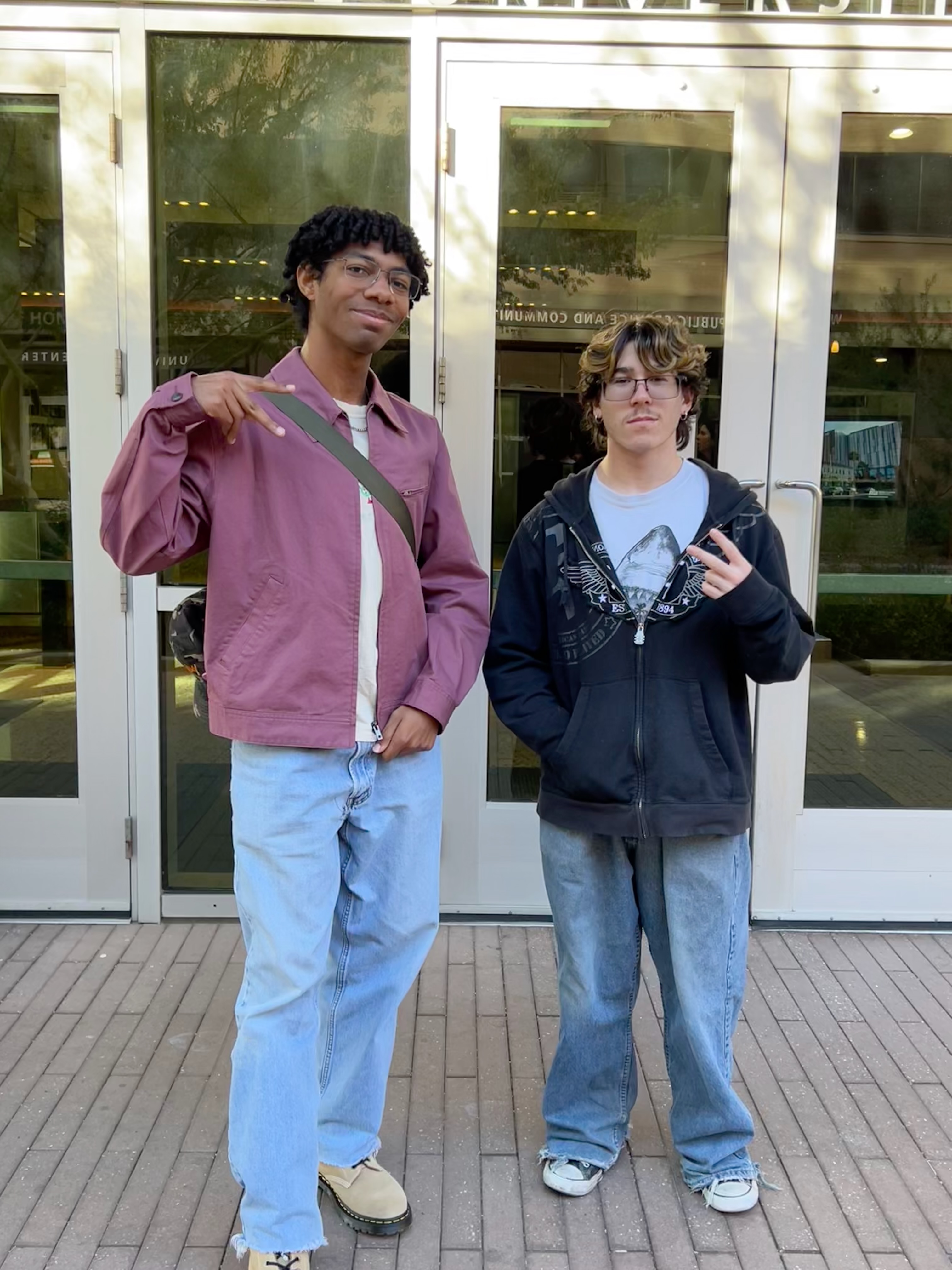
flyingfish is a self-taught and self-produced shoegaze/noise musician from Phoenix whose palette floods his listeners with nostalgia and emotion through guitar layers, and heavy drum kicks. Starting his journey in 2023, flyingfish quickly grew in popularity with the release of tracks, “wonder if you care,” “doesn't matter now,” and “change,” all of which have garnered millions of streams and earned places on curated streaming playlists like Lorem, All New Indie, and Spotify's Best of Indie 2023. Flyingfish’s presence comes during a period of massive shoegaze revival and this year, fans have been blessed by many shows with other bands either headlining or opening for him. 2026 looks to be a great year for him as well, with an East Coast headlining tour, featuring Love Letter, scheduled in March, followed by some shows with Panchiko in April. Flyingfish is cemented in the list of ones to watch right now, and it's great to have him here with us today.
*This interview was conducted live on Blaze Radio during a Niche for Niche segment. Some parts of this transcript have been trimmed for clarity.
CR: Welcome to the show.
Flyingfish (Sam): Thank you. What's up?
CR: Oh my goodness, how do you feel? How's your day going?
S: I'm tired right now.
CR: That's real. It's been a long week. Did you have finals this week?
S: No, I have finals next week. I'm not excited. Well, it's midterms, not finals. Because, it's just the end of my 1st semester and I'm still in high school, so it's still year-based classes.
CR: That's actually crazy. That's so crazy to me. I can't believe it's already December.
S: Right. 2025 is ending. It's over. Once Spotify wrapped comes out, it's like you just got Christmas left.
CR: Yeah. And then you can't drop any albums like in November because it's not gonna pop up on Wrapped.
S: You can't even, you can't drop anything in December unless it's maybe a Christmas album, because otherwise it's definitely a Christmas album. But all of December is also kind of next year. So it's like at this point we're already in 2026. Is what it feels like to me.
CR: At this point, we're unc.
S: At this point, it's like 2045 and we're all like middle-aged.
CR: Oh, no. Don't say that to me. That's– oh dude, someone called me Unc at your show, actually.
S: How old are you?
CR: I'm 21.
S: (Winces) I think that's kinda unc.
CR: Noooo...
S: You know how old I am, right?
CR: 17?
S: Yeah. You're kind of unc, bro. That's like 4 years.
CR: But you're gonna be there soon.
S: No, yeah, I'm gonna be there soon. Except when I'm there… Nah. Okay.
So, something I noticed since the beginning, and I admired was the caught-on-camrecorder aesthetic that you kind of have with the music, the album covers, everything. What drove you to lean into that vibe and build on it?
S: Well, it was never really fully the camcorder thing. It started as just when I was first making music, I always loved curating kind of a, visual aesthetic to it. That sounds stupid, but I always liked going on Pinterest and finding the best photo that matched whatever I put on SoundCloud or whatever. And once I decided to release music on Spotify, and knowing how heavily it was kind of influenced by, you know, nature and the nature that I grew up around in New York, I was like, well, I gotta use my own photos, I can't use Pinterest stuff anymore. I'm too scared of copyright. That's why I shied away from that. So I just used all the photos I had taken on my phone of old places in New York from when I used to live there, which was not particularly long. I am definitely a native Arizonan, but… I'm a greenery guy. And that just kind of influenced all the music that I made at the time because as I transitioned, I didn't always, you know, try to write more alternative rock stuff. So as I transitioned into that, a big influence of mine was just kind of like the visual aesthetic of, you know, greenery and trees and overgrown, abandoned, you know, um, what's the word?
CR: Urbex?
S: Yeah, yeah, yeah. I love that.
CR: And it's like, there's not a lot of that here, you know? You don't see that here that much. And I don't know, I love that vibe.
S: Brutalism.
CR: Yeah. I get you.
Building onto nostalgia, what are some other influences outside of music that you still think of when you're producing?
S: Definitely a lot of just like visual art and photography. That is probably the main influence. I love cinematography. It's not the vast majority of influences, um, that are not like music-based, still come kind of from the music world. You know, like poetry or lyric writing on its own. I still mainly, it's musicians that I respect the most or appreciate.
What are your thoughts on the debate between modern shoegaze versus those first couple artists that gained traction with it, you know?
S: Yeah, I mean, I feel kind of removed from all of that now at this point. That was kind of why I stopped dropping in the first place. But I think at this point, everything's kind of found its own area, most of the bands that blew up kind of just accepted like, “Okay, we’re like nu gaze, shoegaze, not really shoegaze, also this other thing, we're just this other thing now at this point.” And they just kind of accepted what that was and moved on with their own way. And it's like, nobody really cares at this point. Everyone understands. I think the whole reason it became a debate was because most new people adopting it didn't really know what shoegaze was or what the term applied to, so they heard the newer stuff that had shoegaze elements, and misinterpreted, the heavier stuff as what shoegaze was, and not the dreamy stuff is like more of as a simplistic way to look at it. And now I think most people kind of know what the general sound is, what the modern sound is, what falls in that category and now it's just kind of played out.
CR: Yeah, I definitely feel like back then, shoegaze was just an umbrella term for everything.
S: It's just a game of semantics. You know, that's what everybody was arguing over and now it's just gotten tiring.
CR: Everybody's just fans now.
Do you think the internet's been a big influence on that? Or do you think it's more like the old heads just being like, “Oh, y'all don't know xyz.”
S: No, it's definitely more the internet 100%. The internet always likes to blow up that side of the argument because when you're in that pop culture, the easiest thing to do is to play devil's advocate, you know? And it's like, it doesn't have to be anything, but when people are noticing it and the old heads start to mention, like, “Hey, you don't actually know what shoe gaze is, like, you're wrong for that.” People start to see that and they're like, “Oh shit, you're right.” You know? And they don't want to be the wrong ones. They just hop on the train of the “No, no, no, it's definitely not this– it's this,” and it becomes kind of built up. But, I mean, I don't think it's any specific person. I think it's more just arguing to argue. You know?
I think the vast majority of the music that came out of it, people didn't really, some people liked it, some people thought it was bad, you know, there was really nothing more to it. So it became like nobody was just going to argue over that. It became the bigger thing, the easier thing to argue over. And it's like, I think some of that music was not great back then. I think a lot of the stuff that wasn't shoegaze was not great music and it deserved to be critiqued, but not for not being a specific genre that nobody really claimed it was.
CR: Exactly. I think that the entire argument kind of drew away from the fact that people should just enjoy music to enjoy music and it discourages people from discovering more.
S: And that's not even a defense for that music. That, it deserves to be judged in its own right. Clearly, it caused some people to have specific feelings about it, you know? And that's okay, but it drove a lot of people towards instead of trying to actually critique it for the music, trying to critique it for the substance, the aesthetic that it was trying to present, of being shoegaze, or not being shoegaze, and what? The title's lowercase, the title has capitals in it, it's got this Pinterest album cover versus just, you know, a random album cover. It just takes the conversation away from the music. And I feel like that's just kind of a waste of everybody's time.
As we all know, your first couple songs blew up pretty quickly in 2023. What was your reaction, seeing that sudden influx of support for your music back then, and how do you feel about those moments looking back?
S: I was freaked out and I still feel kind of freaked out about it. I think ever since that happened, it was like a segment in my life that everything afterwards just kind of became crazy, you know, where it's like, everything afterwards, I try really hard not to take for granted because it was just surreal. It felt like overnight. I had been going to sleep every night praying like, one day, I want to wake up with a million monthly listeners or something. And then all of a sudden it started to happen. I was like, “What the heck is going on?” You know? Looking back on it, I mean, those were some of the greatest moments of my life.
I still hope that I can kind of have something like that again. It was just a taste of the feeling of, you know, just accelerating upwards. Now at this point, I'm playing crazy shows, I'm doing all this crazy stuff, I feel super privileged and super happy that I've achieved all of this, but it's been steady for a while at this point. You know, there is no exponential growth. In this industry, in music, that growth, that's what people care about. And that's what fuels your moment. It's like a drug, dude. And it's unbelievable. Looking back on it, that got me addicted. You see people so obsessed with clout and fame and all that. It's those kinds of moments that make me understand why.
CR: Definitely agree. I kind of grew up with a lot of those YouTube viral, instant like one night hits. And everybody wanted to be like that. It's just, it's crazy comparing that back then to now with how people will think a million stream song isn't crazy, but try to put that many people in a room, it’s still insane.
S: Even then, though, I mean, at least from my perspective, the way that when I look at my own success, to me, I'm just blown away. I'm like, that's insane. I know like one other person in my entire real life that's not people that I know from music. From school, from family, from anything. The only resemblance that I have to another person that has over a million streams on a song is one person. That's it. Nobody else is even close. You look at the success of someone and big things that happen overnight. I mean, I look at, wonder if you care, and it's got like 8 million streams. I feel like a lot of people take that for granted, but I don't know. I definitely take it for granted. You know, if I woke up tomorrow without that, I'd actually freak out. Like, that's my identity. But it's crazy for anyone.
What are your thoughts on those bands that came back up in popularity because someone discovered an old CD, like Panchiko, for example?
S: That's awesome. I love it. I don't think anybody doesn't like that. I feel like that's, I mean, as long as you like the music. I love Panchiko. I mean, you saying that reminds me of Korea Girl recently, they're awesome, they sound really cool, that's a huge thing. I think we got to encourage way more of that because the fact that those bands are even splitting up in the first place, it's clear that they would have had the support if they actually got put in front of those people and they were never put in front of those people, that feels sad to me that that even has to happen and we should just prevent that in the first place in the music realm. I think it's really a weird time, especially with streaming and how sometimes it does feel like, someone just picks this one guy and you just blow him up, but there's still so many other people, similar people, that deserve just as much love.
I mean, it's, if anything, the place that I see streaming going right now is not a good one. And it sucks. Um, but it should be a good one. And it's still better than anything that we've had before. I was talking to my dad a couple weeks ago about how we consume music. Because I was trying to convince him to use Spotify for anything more than just listening to all the albums that he had already had in his jukebox, and he had like 300 albums in his CD jukebox and he would play that all the time. And at this point, it's easier to get Spotify, listen to any of it anywhere you go forever on your phone. But he wouldn't really branch out very much more than that.
And to me, that feels like a tragedy because on Spotify, you have the ability for anything that's been, somewhat published or distributed in the past that can work its way on there from unfortunately being bought up by Spotify's monopoly, or pseudo-monopoly. But being able to discover that old music is just as beautiful for me as it should be for, you know, someone as old, or older, like my father, who's middle-aged in his 50s, trying to discover newer music of today, you know? I feel like it should go both ways. And it should just be something that's encouraged because that's what's, I think so, amazing about that.
When you were preparing for your first couple shows, what was the transition like going from your produced music at home to having to find people to join your band on stage?
S: Well, that got put together pretty quickly and pretty smoothly, honestly. Originally, like I said, I was never going to show my face. I was never going to play any shows because I viewed it as a very short-term thing, you know? I didn't even expect this to last as long as it did now. I really thought it was just gonna be a couple songs, and I don't know what's gonna happen, probably just gonna like, fade into obscurity really fast. So when I started playing guitar finally, I still didn't look for anybody. I never really got into the local scene very much. Up until that very first show, I had a couple offers and they always got turned down because I was just like, “Sorry, dude. I just play guitar in my room and I make songs and that's kind of it.”
But right after I went to Sick New World, that big festival with a bunch of big shoegaze bands, I got to get into live music about, I'd say literally not even a month after that. I met up with some friends in the local scene and we just happened to click, I met up with Caleb and Geo. Geo's my bassist, and Caleb is my manager. I just met them both through the local scene. That's, they were the first two people that I met. I met them at Sick New World. We managed to meet up there because we had been chatting a little bit just from meeting through the scene. And those are the 2 people that I started playing shows with. I got a drummer and a guitarist who were both in a separate band at the time, and within a couple weeks, we started playing shows, and that just kind of happened.
How would you describe your experience with your first couple audiences?
S: It was fantastic. It's been, for me, it's been amazing from the get go. I feel I've been nothing but thankful. I feel nothing, but, you know, privileged to be able to play the shows the way I do from literally the first show being one of the headlining bands. Crazy.
Thinking back to times you've toured with pretty cool bands like Panchiko, like Alison's Halo, is there any advice like you've heard from them or anybody else that’s stuck with you?
S: I mean, I haven't, I'm more excited to see what'll happen, what I can talk to Panchiko about over in Texas when I actually tour for more than one day with them. But they all seemed just as thankful and surprised by their own popularity as I feel with my own. You know, like Alison’s Halo being one of those resurgent bands, like they started gaining popularity later than I did. I was an earlier rise than they were technically speaking in terms of popularity, but they're from the 90s. So it's just kind of, they were just as surprised. They didn't really– it was less of advice and more of just they all seemed to really, advised to keep humble and really appreciate what it is because nowadays that can just happen. A man can become popular overnight, and it's awesome.
Do you have a favorite guitar pedal arrangement?
S: I've been kind of switching around my pedal board right now, so I guess I would say like, I just, I'm using the Heavy Metal 2 pedal. It's my main distortion now, and that paired up with my older, crazy find pedal, the RV7 hardwire, on the gated reverse setting. If anybody, I don't know if anybody's going to listen to this and know what either of those are, those 2 together is literally like the sound of My Bloody Valentine, just in a discrete pedal setup. It sounds spot on.
Do you have a favorite show that you've done or a location that you visited?
S: I mean, I played a bunch of really awesome shows that I loved. Probably my favorite show ever as a landmark in my mind is probably the show I did at Walter Studios over a year ago at this point in late November of 2024. That was like my 4th show ever. And it was sold out at Walter Studios with Midrift and Glixen, and the crowd was crazy. But the West Coast stuff was awesome. Driving up into the Pacific Northwest being able to play shows up around there was fantastic. I can't remember exactly which state, but like, I want to say Colorado maybe. It got snowy, and we got to drive in through the snow and play with the snow before we went in and played that show just off the road. It was snowing outside while we played and that was really cool.
CR: That's such a vibe. I think I need to go up there before, like one time.
S: You ever been to Denver before?
CR: Nope.
S: I think that's where we were. Played Denver that night. It's not that far from here. It really isn't.
CR: I need to go on a road trip, like myself.
S: Yeah. I want to go on a road trip that's not tour based soon. That would be it.
CR: I mean, you could turn the East Coast into something, I guess.
S: No, I don't get any time. We fly. I do my finals or not my finals, but like my final grade stuff right before, school gets out for spring break. Go to sleep, wake up the next day, and fly to Chicago, stay in Chicago that night, start playing the shows every single night for a week straight, one break, every single show for almost a week or something like that, all the way down to Florida, play the show in the very last spot in Florida, fly back that night as soon as the show's done to get home and I get like half a day home, go to bed, wake up, go to school.
CR: So I don't have any time to. Crazy. Are you excited for it though?
S: Oh, no, yeah, I'm excited. It'll be fun. I'm not too worried about school anyways, by the time I get back, it'll be the very last quarter. I've already cemented my grades as being fine. I've got 4 classes at this point because I did all my AP stuff. I did advanced honor, so I'm like, I'm credited out. I'm done with high school.
CR: You're up. You got the final stretch.
S: Indeed, I'm up.
So we talked about you touring with bands here. What are some of the favorites, like your favorite groups that you've noticed in the Phoenix scene, especially?
S: Okay, well, now I don't want to end up missing out on naming anybody.
CR: Yeah, just like, just name all your friends.
S: Exactly, well that's what I have to do now because I know them all. Well, first off, I gotta shout out Glixen, obviously, because they're going up, they made it out. They're out the local scene. They're on huge things now. It's fantastic. Um, and I said Alison’s Halo earlier as well, because they're kind of like me where it's like, we started music before any actual local scene stuff and their local scene stuff was just back in the day. But beyond all of that, Loomer’s fantastic. You know, Animal Shin, they’re all related to the Glixen stuff. Bright from Tucson. Mudskip and Junk Shop. There's a lot of cool local bands out here. I'm missing a lot. Everybody's included. I wish I had my list prepared right now.
So you have a music collection at all? Like your own, because I know you said your dad had like a big boombox collection.
S: Yeah, I have my own. I kind of raided all that after he was done with it. I have my own CD collection and I have a record collection, but all that's kind of low-key.
CR: What do you find yourself listening to more?
S: Oh, I mean, it's all over the place. You want me to pull up all of the playlists I've been listening to in the last like, what, 24 hours?
CR: Actually, wait, what was your Spotify wrapped?
S: Oh, here. I'll show you my Spotify wrapped. Let me replay the whole thing. Do you want me to do the whole thing or just share the top five?
CR: Yeah, what is the top five? Top five. Here. Mine's kind of embarrassing. Actually, we'll go band for band.
S: What's your– do we want to do artists or songs first? I wanna list my top 5 albums. Hold on. But I'll do artists first. My 5th most listened to artist. And this is 40,000 minutes on Spotify, by the way. So this is kind of pretty low compared to my other years on Spotify. I did listen to a decent bit of those CDs and records. But I was on more of a low-key listening this year. More recording than anything. But at 40,000 minutes listened, my fifth most listened to artist was Smashing Pumpkins. Fourth was Nirvana. Three was Pink Floyd. Two was the Beatles. And then number one, was my favorite artist of all time, Gucci Mane. I was in his top 0.07% global fan with 1556 minutes out of those 40,000 minutes.
CR: So you're D1.
S: Dude, I'm a huge Gucci Mane fan. D1 Gucci Mane fan.
CR: That's actually crazy. Okay, my top five. Number five, I had Frost Children.
S: Okay, they're gas.
CR: Did you hear Sister? Oof. Banger. I wanted to go to the show so bad. I saw them when they came out with Julie.
S: Like the very end of last year or start of this year? I think it was like winter.
CR: Yeah, for my anti-aircraft friend. Uh-huh. And then Her New Knife was there too.
S: I think they opened first or no, I don't even remember. Yeah, no, yeah, it was Her New Knife and then Frost Children, and then I left before Julie. Curfew. They ended up playing super late.
CR: That's so sad. My number 4 was Men I Trust. They've been in there for a couple years, and then number 3, JPEGMAFIA. And then Mag Bay, and then Wednesday.
S: Wednesday.
CR: Have you heard them?
S: No, that's the only one I don't recognize.
CR: They're like on that whole thing– They're like shoegaze mixed with kind of– like shoegaze, but like with like a country twist, you know?
S: Okay, like folk?
CR: Not like folk, but more just like straight country?
S: I might not like it.
CR: See, I'm not into country either, but they mix into rock so well.
S: Okay, well, I will, I'm saving, I'll listen to Bleeds. Shout out Wednesday.
CR: Yeah, listen to that. Listen to Bleeds. That one's really good. Their most recent album.
S: You actually have like, you have a good top five.
CR: I'm just like, I didn't want to post my Wrapped because it was all Wednesday songs.
S: I was super happy with my Wrapped because I'm happy with my albums. Because my albums, number 5 is Revolver by the Beatles. It's my favorite Beatles album. One of my favorite, if not my favorite album of all time. Number 4 is Sail in the South by ESG. Shout out South Coast. Shout out DJ Screw, shout out Houston, Screwed Up Click, all that. I love 90's, you know, southern hip hop, clearly, if I'm Gucci Mane’s fan. Number 3 is Dope Throne by Electric Wizard. That's just fantastic. It's my favorite metal album of all time, any kind of metal. I'm a huge doom sludge metal guy. So, and I think that Dope Throne by Electric Wizard is by far, in a way, the best sludge album. I don't care what anyone says. It's a million times better than Acid Bath. Number 2 was Either/Or by Elliott Smith. That's probably my favorite album of all time right now. And then number 1 was the mixtape Chicken Talk by Gucci Mane.
CR: Okay, that's actually pretty diverse. That's a good flex if you really need to be niche out there.
S: Like, oh, yeah. It's just you gotta be...Find out what you like. I mean, there's a lot of things that I like when it comes to specific kinds of music. I really like Southern Trap. I really like, you know, dreamy shoegaze. Dial into those little spots and find it out.
CR: So what I'm hearing is for the next track it’s gonna be you rapping on it.
S: Yeah, no, there's already rap influence coming in. I'm gonna get 808s. I'm going underground with it, too. I got to keep up with the time, so I'm doing like, jugg patterns. Well, that's kind of how wonder if you care, technically the wonder if you care pattern. The kick pattern is a very slowed down, I guess what you would consider like jugg or just stereotypical trap pattern. That's why I did the drums like that. The drumbeat that I use for everything because I started with hip hop production and that's just the stereotypical hip hop beat. Blew up from there. And there's cash right after that.
Okay, this one might be difficult, but what are some things that you've noticed about the Phoenix scene that you enjoy or that make it unique in your opinion compared to others?
S: I wouldn't really know because I don't know any other music scenes. This is the only one that I've grown up around and known. I mean, I understand the California scene because of how close it is and because I have friends out there and I've been out there a couple times, but beyond that, I would say Phoenix is just kind of like the lesser, like less poser-y, less constant, pretentious California scene, like that's kind of it. It's very, the Southwest scene is not, I mean, I would say it's all kind of very similar. So a band from Phoenix is very similar to a band from New Mexico, similar to a band from maybe Vegas-ish, but there's not as many from out there. So it's just kind of, this is that popular area for those kinds of bands, but I wouldn't, I don't think it's particularly unique, other than I think it's full of fantastic people. There's not very many bands or members of the scene, at least nowadays that I could say that I've met that are super terrible, you know, yeah.
Since your last song in February, "pitching stones," what are some discoveries that you've made that you look towards when you make new tracks?
S: I've been trying to reevaluate my songwriting a lot. That was kind of what pitching stones was supposed to symbolize, like, me changing it up when it comes to writing lyrics and building a song and arranging it and deciding what role everything should play. I've been getting a lot more into hip hop and stuff again, so when it comes to production, that overproduced, sort of electronic feeling is something I want to start bringing back into it. But on top of that, I've also just wanted to be a bit more natural with it. I think if you listen to "pitching stones" versus any of the older tracks, you can tell how natural and real and recorded it actually sounds. It's real guitars, it's real recorded bass. The drums are not real. They sound real, like if I told you they were real, you'd think they were real. They're not. I mean, I program them, but I've been studying, I've been learning how to play drums and I've been studying what it means to actually play things. So I can program extremely realistic drum beats that I can have my drummer play live exactly the same. It's just that he doesn't record them because it's way easier if I program them all in the most realistic way possible. But I think that's where I'm trying to go, where it's just a bit more authentic, a bit more real, but still keeping that unique root of being a producer and being a songwriter and musician first before I am a lyricist or, you know, an entire, you know, singer.
Where do you see yourself going with music in the future, and is there anything you would say to yourself or like others like you, in that first phase of starting out?
S: I mean, I would hope in the future that I'm still doing this as a career. I plan on doing this for as long as I can. I'm hoping that, the new stuff that I hope on putting out soon, you know, top secret, but next year, that will kind of sort of lead me in a direction that I can start to build on because otherwise I'm still planning on going to college next year and doing it alongside that with no real goal in mind other than just trying to make it serve itself as a career. We'll see where it takes me.
But advice for people in the same situation, I would just say keep doing it, you know? Figure out what you want from it. Don't just give up because you think you might want something else either. It's like, when the opportunity presents itself and you have the ability to explore and express and create and collaborate and do all these things through music and you enjoy it and you feel it, that's something deep down inside yourself telling you to do it, you know? You don't just ignore that feeling. You should go and chase after it as far as you possibly can and see where it leads you. Don't try to force anything if you don't end up feeling it and you feel a calling to somewhere else, don't force it. And if it's working out, but you find yourself caring more about the success than the actual process, maybe start to reevaluate why you do it.
It's something special that you should pursue, you know, when music calls you, don’t just ignore that. Follow that. Learn guitar, learn production, learn a DAW. When you're behind a computer every day, you learn how to use a file explorer, you learn how to use new games and new software and new programs all the time, learn a DAW, learn how to record. It seems so daunting, but like actually writing and creating a full song that you could put on Spotify and Soundcloud, I don't know about fully like a studio professional, but sound professional enough to make it a career, clearly if I'm making enough money from this for it to be a career. It's like, you could do it from your bedroom at this point. Why not try?
CR: Wise words, and he's not even unc yet.
S: I'm basically unc, though, because I've been doing it for, like, 3 years now. That's washed out status for it.
CR: No.
S: I fell off.
CR: No, no, no. Don't believe that. I don't believe that. I think even if you think you fell off, you can still get back up.
S: Oh, I'll get back up. I'll get back up.
CR: There's always an “It's so back.” But yeah, that's everything I had. Um, so I'll just wrap up. I'll say, thank you again for coming. Awesome to have you here and see where you're going. For everyone out there, go listen to flyingfish on all platforms: Spotify, Apple Music, YouTube, Bandcamp, as well as anywhere on the East Coast. There's tickets to a pretty cheap show near you with very cool artists. Tap in to realflyingfish.com. And then we'll see you guys later. My name's Caleb. This is Niche for Niche. You're listening to Blaze Radio. Thank you guys. Love you guys. Bye.